

Table of Contents
- Resin vs Metal Dice for Beginners: The Quick Answer
- Resin Dice Pros and Cons: Lightweight, Affordable, and Full of Color
- Metal Dice Pros and Cons: Weight, Durability, and Table Damage
- Weight, Feel, and Sound: What Your Hand Actually Notices
- Balance, Fairness, and Manufacturing Quality
- Best Dice for Beginners: A Practical Decision Guide
- Why You Need a Metal Dice Rolling Tray (and What to Look For)
- Conclusion: Pick the Set That Fits Your Table
- Frequently Asked Questions
Last Updated: October 12, 2026
Resin vs Metal Dice for Beginners: The Quick Answer
For most beginners, resin dice are the better first purchase. They cost less, come in far more colors and finishes, and they will not chew up your kitchen table. Metal dice win on weight, durability, and that satisfying heft in the hand, but they demand a dice tray and a bigger budget.

Here is the short version: buy resin if you are building your first collection, buy metal if you already own a set and want something that feels genuinely different. The five factors below, weight, durability, sound, balance, and price, are what actually separate the two materials.
Resin Dice Pros and Cons: Lightweight, Affordable, and Full of Color
Resin dice are cast from liquid resin poured into molds, which is why they can hold swirls, glitter, inclusions, and layered colors that metal simply cannot replicate. That manufacturing method is also why they are the cheaper option.
Pros:
- Wide design range, from transparent clears to sharp-edge sets with embedded figures
- Lightweight, so a full 7-piece set adds almost nothing to your bag
- Gentler on wooden tables and glass surfaces
- Lower price per set, which matters when you are still deciding what you like
Cons:
- Can chip or crack if dropped on a hard floor
- Sharp-edge resin sets have points that wear down over years of use
- Cheap mass-produced resin sometimes arrives with bubbles or uneven paint
That last point is the real risk. A common mistake is buying the cheapest resin set on a marketplace and judging all resin by it. Our Dragon Eye sharp-edge resin set is a good example of what properly finished resin looks like, with a dragon eye suspended at the center of each die.

Metal Dice Pros and Cons: Weight, Durability, and Table Damage
Metal dice are die-cast from alloys such as zinc, then finished with embossed or engraved numbering. The payoff is weight and longevity. The trade-off is damage, and most beginner guides gloss over how that damage actually happens.
Pros:
- Heavier in the hand, which many players find more satisfying to roll
- Highly durable, they survive drops that would chip resin
- Premium finishes, including textured, solid, and glow-in-the-dark options
- Rounded-corner designs roll smoothly instead of clattering
Cons:
- Can dent or scratch wooden tables, and heavy d20s can knock miniatures over
- Cost more per set than resin
- Louder on impact, which matters in shared spaces
- Fewer wild color and inclusion options than resin
How Metal Dice Actually Damage Things
The damage concern is not exaggerated, and it is worth understanding the mechanism. A metal d20 dropped from standing height carries real momentum because of its mass. When it lands on a bare wooden table, that energy transfers into the surface and can leave a visible dent or a crescent-shaped scratch.
Miniatures are the second casualty. Other dice are the third casualty: metal dice rolling into a pile of resin dice can scuff or chip the softer resin over time.
Practical Safeguards That Actually Work
- Always roll on a padded or felt-lined tray. This is the single most effective safeguard. The felt absorbs impact and keeps the die from skidding into miniatures or off the table.
- Keep a dedicated rolling zone. Even with a tray, keep miniatures and terrain at least a few inches back from the tray edge so a bounce-out does not reach them.
- Use a mat under the tray on hard tables. A thin neoprene or leather mat adds a second layer of protection if a die escapes the tray.
- Choose rounded-corner metal dice over sharp-edge metal dice. Rounded corners spread the impact over a larger area and reduce the bite on surfaces.
- Store metal dice separately from resin dice. A cloth pouch or a divided case prevents metal edges from scuffing softer resin dice in transit.
Our Metal Dice Sets address this with rounded corners rather than sharp points, which reduces the bite on your table surface while keeping the weight players want.
Weight, Feel, and Sound: What Your Hand Actually Notices
The difference you notice first is weight, and it is bigger than most beginners expect. A comparable 7-piece metal set usually runs 5 to 8 ounces total, and a single metal d20 often weighs 1 to 1.5 ounces, or about five times its resin counterpart.
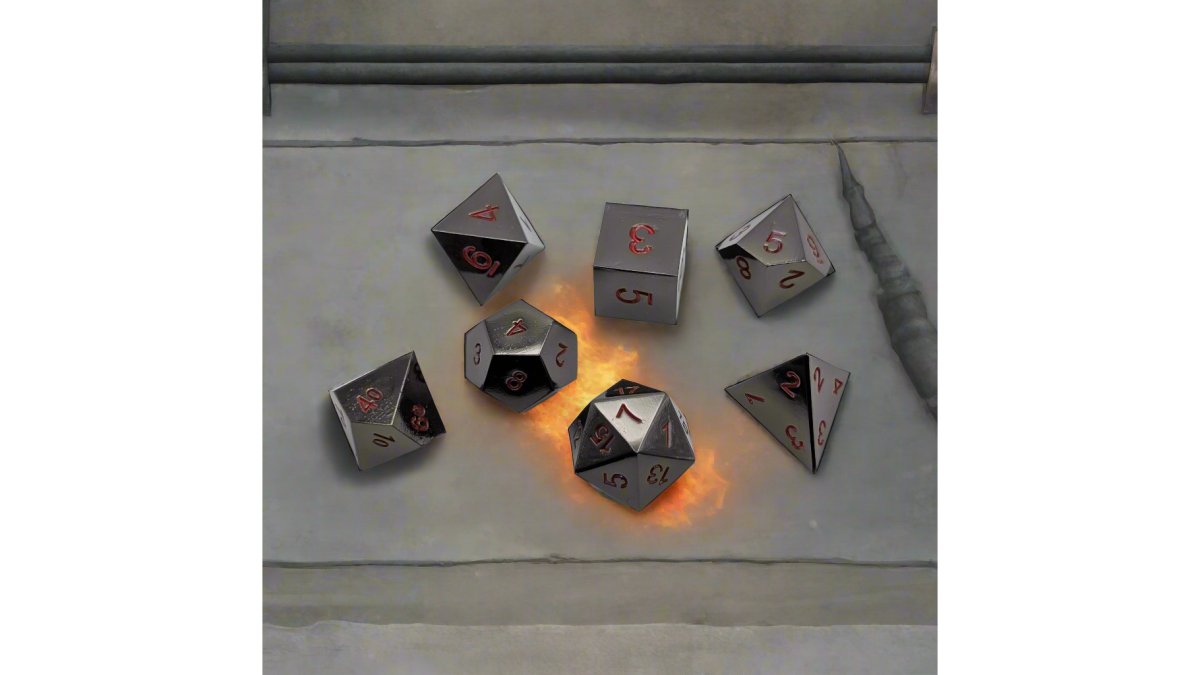
Size matters too. Standard polyhedral dice follow the same nominal scale regardless of material, so a resin d20 and a metal d20 are usually within a few millimeters of each other across the face.
Sound is the second thing, and it is measurable in feel if not in a lab. Resin produces a light plastic click that stays close to the tray.
Temperature is a smaller but real difference. Metal feels cold on first contact and warms to your hand within a few rolls. Resin sits at room temperature and never gives that cold-then-warm shift.
Here is a quick reference for what your hand and ears will actually notice:
| Attribute | Resin (typical 7-piece set) | Metal (typical 7-piece set) |
|---|---|---|
| Total set weight | About 1 to 1.5 oz | About 5 to 8 oz |
| Single d20 weight | About 0.2 to 0.3 oz | About 1 to 1.5 oz |
| Roll motion needed | Firmer flick | Short, low flick |
| Impact sound | Light plastic click | Sharp ringing clack |
| First-touch feel | Room temperature | Cold, then warms |
Beginners often assume heavier means better. It does not. It means different.
Balance, Fairness, and Manufacturing Quality
Balance is where beginners get misled. A well-made die of either material rolls fairly. The problems come from poor manufacturing, not from the material itself.
Resin dice are cast, so air bubbles or a dense inclusion sitting off-center can bias a die. Metal dice are die-cast and machined, so a badly finished die can have one face heavier than another.

What most guides miss is that weight does not equal fairness. Our Ancient Passions metal set is shaped for balanced rolls, and our Basic Sharp Edge resin set uses precision-cut edges and deeply engraved numerals so results stay readable.
Best Dice for Beginners: A Practical Decision Guide
The best dice for beginners are resin dice, unless you already know you want the weight of metal. Use the table below to match the material to your situation.
| Your Situation | Best Choice | Why |
|---|---|---|
| First set, tight budget | Resin | Lower cost, more style options |
| Rolling on a wooden table | Resin | Softer impact, less surface damage |
| You own a padded dice tray | Metal | Weight and durability without the risk |
| Playing late at night | Resin | Much quieter on impact |
| Want a set to last years | Metal | Survives drops that chip resin |
| Love custom colors and inclusions | Resin | Metal cannot match the design range |
| Want a premium feel in hand | Metal | Heavier, more substantial roll |
A simple buying checklist for your first set:
- Confirm the set has all 7 polyhedral dice: d4, d6, d8, d10, d12, d20, and percentile
- Check the numbering is engraved, not printed, so it does not rub off
- Decide your rolling surface before you buy, metal needs a tray
- Hold both materials if you can before committing to a full collection
- Buy one set first, then expand once you know what you like
If you are still unsure, start with resin. You can always add metal later, and most players eventually own both.
Why You Need a Metal Dice Rolling Tray (and What to Look For)
A metal dice rolling tray is not optional if you own metal dice. It is the single piece of gear that prevents table damage, keeps dice from rolling off the table mid-game, and softens the sound.
What to look for:
- Padded or felt-lined base to absorb impact and protect the tray itself
- Raised walls at least 2.5 centimeters high so a heavy d20 cannot bounce out
- Non-slip feet so the tray stays put on a smooth table
- Size for a full 7-piece set, roughly 20 by 25 centimeters works for most players
- Portability, a folding or lightweight tray travels better to game nights
If you roll metal dice without a tray, expect scratches on the table and lost dice under the sofa. Resin players benefit from a tray too, but the stakes are lower.
Conclusion: Pick the Set That Fits Your Table
The resin vs metal dice choice comes down to your table, your budget, and your ears. Resin gives beginners affordability, color, and gentle rolls. Metal gives weight, durability, and a feel that resin cannot copy, at the cost of a tray and a little more money.
At The Gaming Vault, we stock both, so you can start with a handmade resin set and add a premium metal set when you are ready.
Start with one set, roll it for a few sessions, and you will know exactly which material suits your table.
Frequently Asked Questions
Are resin or metal dice better for beginners?
Resin dice are usually the better first set for beginners. They cost less, come in a wider range of colors and finishes, and won't damage a wooden table if you roll them without a tray. Metal dice are worth buying once you know you'll stick with the hobby, since their weight and durability make them a long-term investment. Many players start with resin and add metal later.
Can metal dice damage a gaming table?
Yes. Metal dice are dense and hit hard, so rolling them directly on a wooden or glass table can leave dents, scratches, or chips over time. The fix is simple: use a metal dice rolling tray with a padded or felt-lined base. Many metal sets also have rounded corners, which reduces the impact compared to sharp-edged designs, but a tray is still the safest option.
Do resin dice scratch each other?
They can. Resin is softer than metal, so dice stored loose in the same bag will rub against each other and pick up small scratches and dull spots. A dice bag with separate compartments or a hard storage case keeps each die apart. If you already have scratches, a light polish can restore some shine, but prevention is easier than repair.
What are the main differences between resin and metal dice?
The main differences are weight, price, and durability. Resin dice are lightweight, affordable, and available in almost any color or inclusion, but they chip and scratch more easily. Metal dice are heavier, cost more, and resist damage well, but they can dent tables and miniatures. Both roll fairly when made well, so the choice comes down to feel and how you play.
How do you care for resin and metal dice?
Wipe both types with a soft cloth after play to remove oils and dust. Store resin dice away from direct sunlight, since UV exposure can yellow or fade some resins. For metal dice, dry them thoroughly if they get wet to prevent oxidation, and keep them in a lined case so they don't bang against each other. Avoid harsh solvents on either material.
Most beginners start with resin and never regret it, then add a metal set once they have a tray and a favorite campaign. If you want a first set that looks striking, reads clearly, and will not damage your table, browse our handmade resin dice sets. If you want weight and longevity, our premium metal RPG dice deliver both. Get started with The Gaming Vault and find the set that fits your table.